

You have a 38-step local SEO checklist open in a tab. You did steps 1 to 6 in March. It is October now, and the tab is still open. Meanwhile, asking customers for honest reviews sits at step 31, so it never happened.
The problem with those lists is not that the steps are wrong. It is that everything looks equally important. Order matters more than length.
What Google actually says decides local rankings
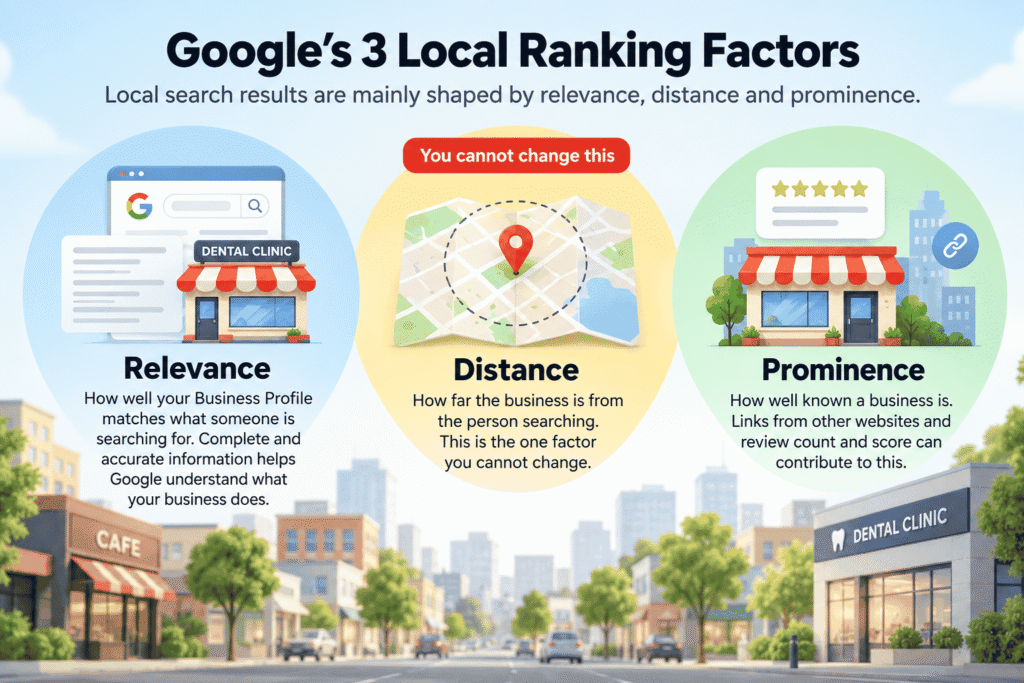
Google says local results are mainly shaped by relevance, distance and prominence, so your checklist should start with the things that make your business easier to match to a search.
Relevance means how well your Business Profile matches what someone is searching for. Complete, accurate information helps Google understand what the business does.
Distance is how far the business is from the person searching. This is the one factor you cannot change. A business cannot optimise its way closer to a customer.
Prominence describes how well known a business is. Google says links from other websites and review count and score can contribute to it. It also says there is no way to request or pay for a better local ranking.
As of October 2026, that is a better starting point than a long list of tricks. Read Google’s local ranking guidance before you start.
The local SEO checklist, in the order that matters
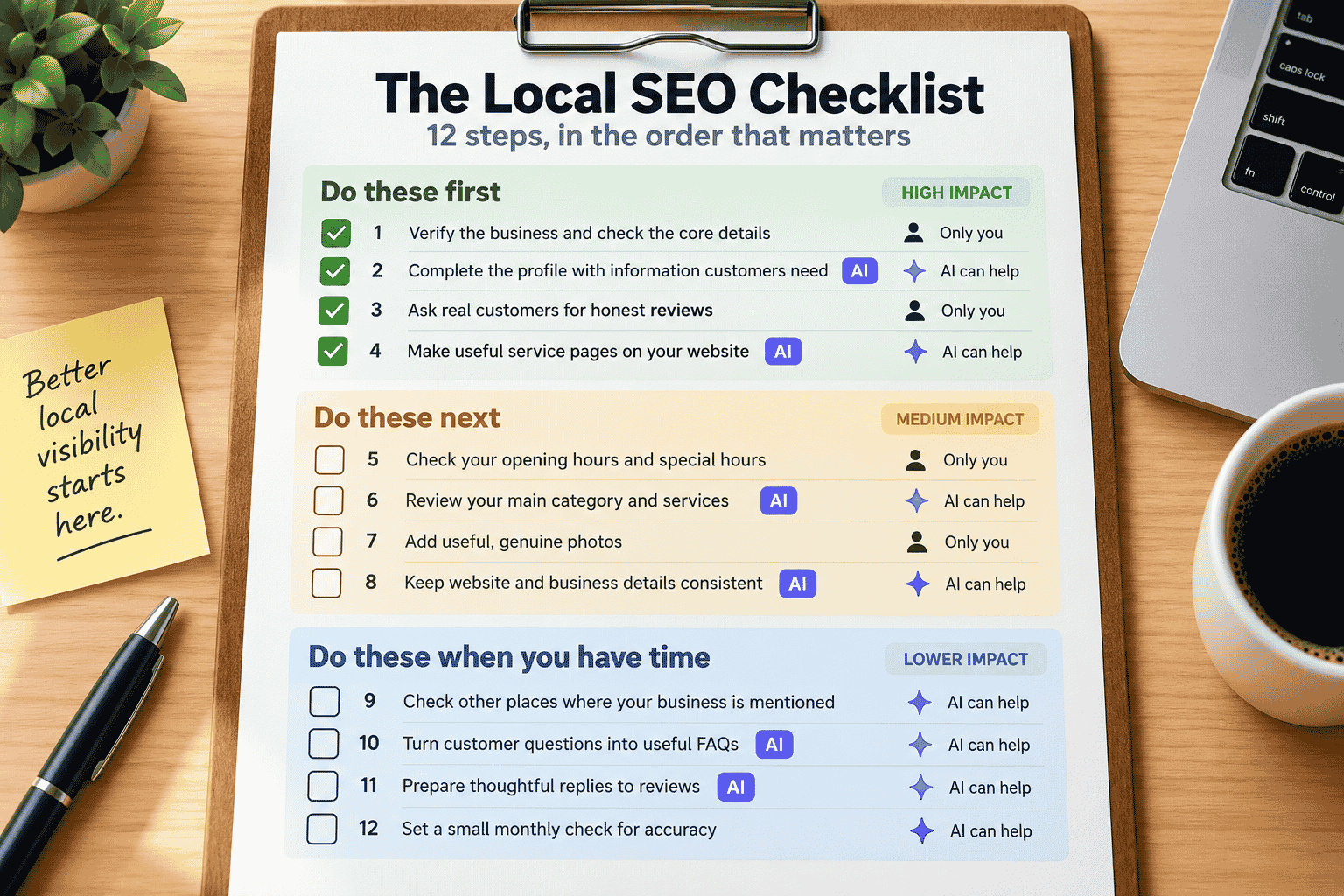
This local SEO checklist puts the work into 3 groups: do first, do next, and do when you have time.
Do these first
1. Verify the business and check the core details. Make sure the real business owner or authorised person has control of the profile, then check the business name, address, phone number, website and category. Only you can do this. AI can organise the information, but it cannot prove that the business details are true.
2. Complete the profile with information customers actually need. Fill in the relevant business details, services, hours and other information that accurately describes the business. AI can help. Give it the real details and ask it to spot missing information, but check every suggestion before publishing.
3. Ask real customers for honest reviews. Make review requests part of the normal customer follow-up process, without filtering who gets asked or offering an incentive for a positive review. Only you can do this. AI can write the request message, but it cannot create genuine customer experiences or reviews.
4. Make the website page for each important service useful and clear. If you run a dental clinic, for example, a page about teeth cleaning should clearly explain that service, who it is for, where the clinic serves customers and how to contact you. AI can help. Google recommends useful, people-first content and clear site organisation, which you can review in its SEO Starter Guide.
Do these next
5. Check your opening hours and special hours. Keep the information accurate when the business closes for a holiday, changes its schedule or operates different hours on certain days. Only you can do this. AI can prepare a checklist from your calendar, but the actual hours have to come from the business.
6. Review your main category and services. The category should describe what the business really is, and the services should reflect what it actually offers. AI can help. Give it your business details and customer questions, then use its suggestions as a review list rather than as instructions to copy blindly.
7. Add useful, genuine photos. Show the place, team, products or work in a way that helps a potential customer understand what they will find. Only you can do this. AI can suggest a photo list, but it should not invent what the business looks like.
8. Keep the website and business details consistent. Check that the business name, address, phone number, services and contact information match the real business. AI can help. It can compare details and point out differences, while you decide which version is correct.
Do these when you have time
9. Make a simple list of other places where the business is mentioned. Check important local directories, industry listings and other public business pages for obvious errors. AI can help. It can sort a messy list and highlight inconsistent names, addresses or phone numbers. You do not need to turn this into a giant citation-building project.
10. Turn real customer questions into useful website FAQs. Collect questions people ask before booking, buying or visiting, then answer them clearly on the relevant page. AI can help. It can group similar questions and draft answers from information you provide.
11. Prepare thoughtful replies to reviews. Read each review and respond in a way that fits the actual customer experience. AI can help. It can draft a reply in your preferred tone, but a person should check every response before it goes live, especially when the review mentions a specific service, complaint or staff member.
12. Set a small monthly check for accuracy. Recheck the profile, hours, important services, website contact details and recent customer questions instead of reopening a 38-step checklist every few months. AI can help. It can turn your notes into a short repeatable checklist, while you confirm the facts.
What AI can genuinely do here, and what it cannot
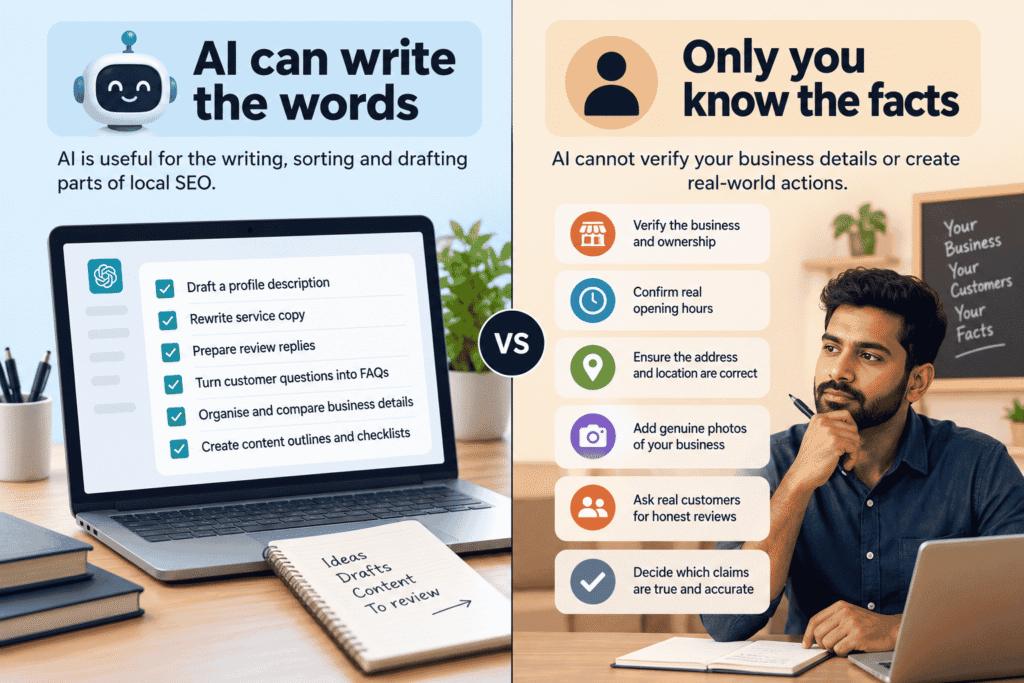
AI is useful for the writing, sorting and drafting parts of local SEO, but it cannot know whether the facts about your business are true.
You can use it to draft a profile description, rewrite service copy, prepare review replies, turn customer questions into FAQ content, or sort a messy list of business listings into consistent name, address and phone details. If you handle several clients, this guide to using ChatGPT for SEO without generic output shows the same principle in more detail, and this guide to reusable Claude workflows is useful when the same work repeats across clients.
It cannot verify your business, know your real opening hours, decide whether a claim about your service is true, generate genuine reviews, or confirm anything about your actual location. AI can write the words. It cannot know the facts unless you give them to it.
That distinction matters because a fluent sentence can still be false. AI may add something like “award-winning” or “with over 10 years of experience” simply because that sounds like normal business copy. If you cannot prove a claim, delete it.
Does any of this help you show up in AI answers?
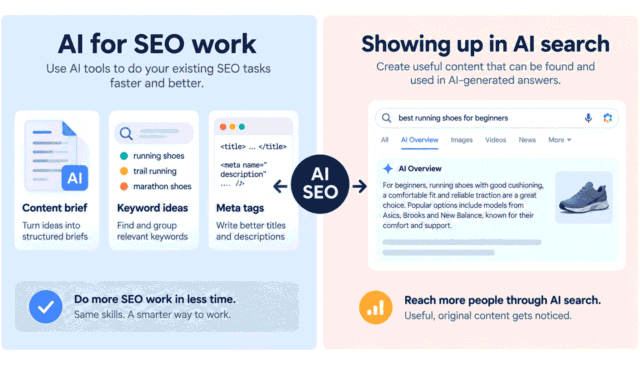
The same basic SEO work applies to Google’s AI search features, so you do not need a separate local AI SEO project.
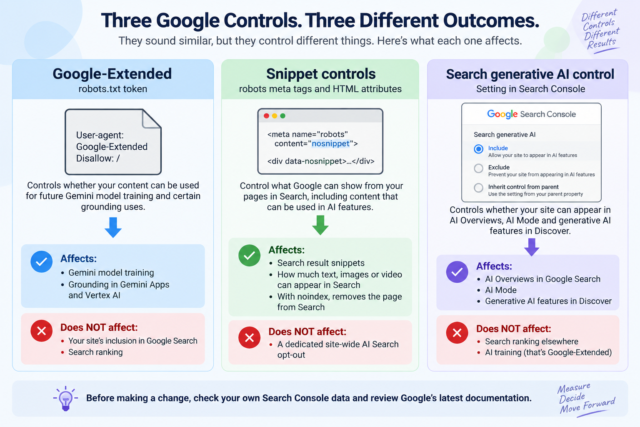
Google says there are no additional requirements or special optimisations needed to appear in AI Overviews or AI Mode. It also says the existing SEO fundamentals remain relevant, including keeping Business Profile information up to date. See Google’s guidance on AI features and your website for the current position.
Google’s guidance on generative AI search says that optimising for these features is still SEO. For a local business, useful website pages and accurate business details remain the foundation. Our explanation of AI SEO covers the wider idea, while this guide to being useful and quotable in AI Overviews goes deeper into content.
You do not need a second checklist just because the search result now contains an AI answer.
Try it on your own profile
The difference between a weak AI request and a useful one is the business information you give it. The Google Business Profile is still often called Google My Business, so you may hear both names.
Here is the prompt a beginner might naturally write:
Write a Google Business Profile description for my business.That prompt gives the AI almost nothing to work with. It does not know the business, customer questions or which claims it may safely make.
Now give it the information it needs:
You are helping me rewrite a Google Business Profile description and services list.
Business type: [for example, dental clinic]
Area served: [city and specific areas]
How far customers realistically travel to us: [distance or areas]
Current description:
[paste the current description]
Our 5 most important services, written in the words customers actually use:
1. [service]
2. [service]
3. [service]
4. [service]
5. [service]
The 3 questions customers ask before booking:
1. [question]
2. [question]
3. [question]
Rules:
- Every claim must come only from the information I have provided.
- Do not add awards, years in business, credentials, qualifications, locations, services or other facts that I have not given you.
- Do not invent customer results or testimonials.
- Keep the description under 750 characters.
- Then provide the 5 services, with a 1-line description for each.
Output:
1. Revised business description
2. Services list with 1-line descriptions
The second prompt works better because it removes the guesswork. It gives the AI the business type, service area, real services, customer language and a hard rule against invented claims. You still need to read every line before using it.
What should you do this week?
Finish the first 3 steps of this checklist before you touch the other 9, and hand step 2 to AI to help you find missing or unclear information.
One work session is enough. Close the 38-step tab.
Frequently Asked Questions
Can ChatGPT do an SEO audit?
ChatGPT can help draft, sort and summarise parts of an SEO audit, but a chat-only audit cannot fetch or verify your live business data, so it should not be treated as a complete audit.
How to perform local SEO?
Start by making your business information accurate and complete, then build genuine customer reviews and improve the website pages that explain your important services.
What is a SEO checklist?
An SEO checklist is a list of tasks used to review and improve a website or business presence in search, usually arranged so important work is completed before lower-priority tasks.
What is the 80/20 rule in SEO?
The 80/20 rule in SEO is a way of prioritising the small number of tasks that appear most useful instead of trying to complete every possible optimisation. That is why this checklist starts with 3 practical steps rather than asking you to finish all 12 at once.

Leave a Reply